
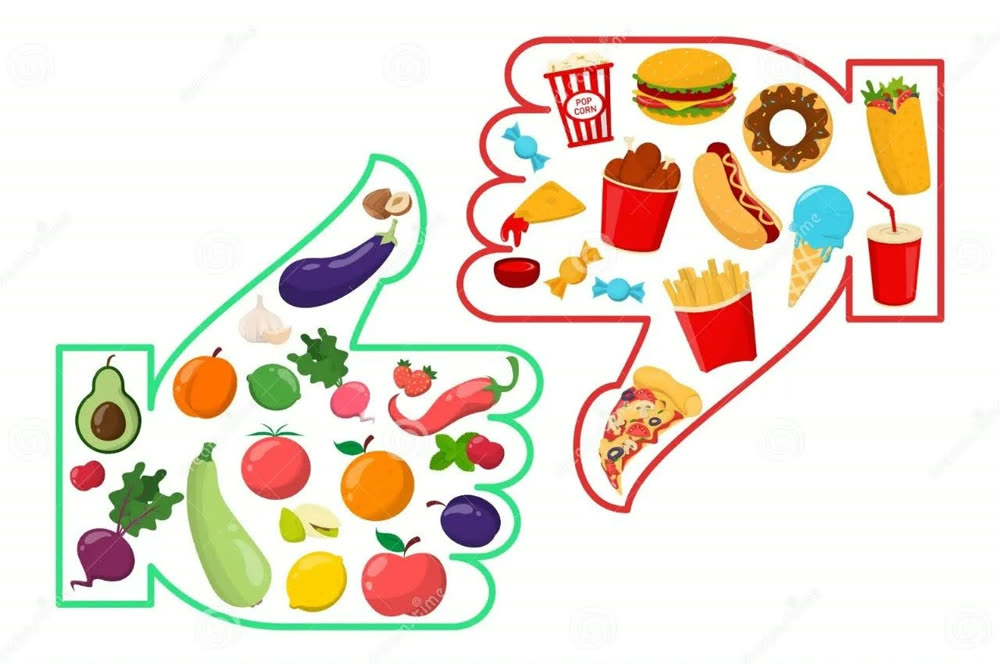
Today, most people have an unhealthy relationship with food. The consequences are evident in the form of various health markers. For instance, according to the International Diabetes Federation, in 2021, 26.7% of adults in Pakistan were affected by diabetes making the total number of cases approximately 33 million↗. The IDF ranked Pakistan first place for having the highest comparative diabetes prevalence rate in 2021↗. The World Health Organization figures show that according to the Asian cutoffs, 72.3% of Pakistanis are overweight, of which 58.1% are obese. What is even more concerning is that a colossal 40% of children in Pakistan are either overweight or obese↗.
Research has shown that the negative consequences of bad food choices are not just limited to the body but also extend to the mind. The depression and anxiety pandemic is being fueled by junk food whether packaged, frozen, instant, ready-to-cook, or fast food. The resulting obesity and other health problems are major sources of low self-esteem and poor academic performance in our youth. It should be a primary objective of our parenting to instill healthy eating habits in our children.
Parents are no exception and obviously, such parents have serious difficulty in raising healthy eaters. The reasons for this are multifaceted and deeply ingrained. Let's discuss them one by one.
Values
It is acceptable that some individuals or even a small section of society hold dear certain characteristics, as long as they don't become a part of the value system of society. Once that happens, and a trait or behavior is elevated to the level of a societal value that everyone starts seeking, it becomes very difficult to turn the tide. Even individuals with a strong value system will start having difficulty in resisting and going against it. The modern era has seen many such changes in the value system and the following three concepts have been elevated to the pedestal of values that were never before as important as they have become today -- taste, speed, and convenience.
Taste: The Seduction of Flavor
In ages past, taste was a privilege reserved for special occasions or the fortunate few who could afford exquisite culinary experiences. Food was primarily valued for its sustenance, and the notion of taste was a secondary concern. Over time, however, a seismic shift occurred in our societal values. Taste evolved from a luxury to a ubiquitous expectation. Today, people are willing to go to great lengths and spare no expense to savor the most tantalizing flavors. Fast-food chains and packaged food manufacturers compete fiercely, offering hyper-palatable↗ foods - a term used to describe foods that have specific combinations of fat, sugar, sodium, and carbohydrates. Such foods are artificially rewarding to eat and harder to stop consuming (think of chips) but often come at the expense of health. This insatiable pursuit of taste, once an occasional indulgence, has taken center stage, overshadowing considerations of nutrition and balanced diets.
Speed: The Relentless Rush of Modern Life
The second value that has transformed our relationship with food is speed. In bygone eras, meals were crafted with patience, cooked slowly, and savored over leisurely gatherings. However, the accelerating pace of modern life has given rise to the cult of speed. Fast food, microwave dinners, and on-the-go snacks have become staples, enabling us to satisfy our hunger cravings at a moment's notice. People now prioritize the rapidity with which they can consume food over its quality or nutritional value. The drive-thru culture and ready-to-cook meal kits exemplify this newfound emphasis on expediency, often leading to choices that compromise our well-being.
Convenience: The Era of Effortlessness
Lastly, the concept of convenience has reshaped our food choices and behaviors. Traditionally, meals required meticulous preparation, hours in the kitchen, and the dedication of considerable time and effort. Today, convenience reigns supreme. Pre-packaged, ready-to-eat meals and one-click food delivery services have elevated ease of access to the paramount criterion for meal choices. The convenience factor extends beyond just the consumption stage; it encompasses the entire culinary process, from shopping to cooking to cleanup. We are willing to spend more on pre-cut vegetables, pre-seasoned meats, and disposable cookware just to minimize the effort involved, even when it means accumulating more waste and sacrificing our long-term health.
Unclear WHY
We will have to clarify our WHY related to food. Indeed, the fundamental question of "why" we eat food has become increasingly obscured in the modern world. From a worldly perspective, the primary purpose of consuming food should be to nourish our bodies and provide essential energy. This should invariably lead us to question our food choices based on the simple criterion of benefit for the body. This is quite primitive thinking, but unfortunately, in today's society, the motivations for eating have diverged dramatically. Pleasure and boredom have taken precedence over sustenance and benefit. Many of us eat not because we are hungry or require nutrition, but simply because we find pleasure in the act of eating or seek an escape from monotony.
Looking at this issue from a religious perspective, the Quranic account of Bani-Israel serves as a poignant reminder. They were provided with sustenance from the heavens (Mann o Salwa), a miraculous and nutritionally complete source of food. However, their insatiable desire for taste and pleasure led them to complain and wish for something more enticing, even if it meant sacrificing their health and being ungrateful to Allah. It is mentioned in the Holy Qur'an:
وَإِذْ قُلْتُمْ يَـٰمُوسَىٰ لَن نَّصْبِرَ عَلَىٰ طَعَامٍۢ وَٰحِدٍۢ فَٱدْعُ لَنَا رَبَّكَ يُخْرِجْ لَنَا مِمَّا تُنۢبِتُ ٱلْأَرْضُ مِنۢ بَقْلِهَا وَقِثَّآئِهَا وَفُومِهَا وَعَدَسِهَا وَبَصَلِهَا ۖ قَالَ أَتَسْتَبْدِلُونَ ٱلَّذِى هُوَ أَدْنَىٰ بِٱلَّذِى هُوَ خَيْرٌ ۚ ٱهْبِطُوا۟ مِصْرًۭا فَإِنَّ لَكُم مَّا سَأَلْتُمْ ۗ وَضُرِبَتْ عَلَيْهِمُ ٱلذِّلَّةُ وَٱلْمَسْكَنَةُ وَبَآءُو بِغَضَبٍۢ مِّنَ ٱللَّهِ ۗ ذَٰلِكَ بِأَنَّهُمْ كَانُوا۟ يَكْفُرُونَ بِـَٔايَـٰتِ ٱللَّهِ وَيَقْتُلُونَ ٱلنَّبِيِّـۧنَ بِغَيْرِ ٱلْحَقِّ ۗ ذَٰلِكَ بِمَا عَصَوا۟ وَّكَانُوا۟ يَعْتَدُونَ ٦١
And ˹remember˺ when you said, "O Moses! We cannot endure the same meal ˹every day˺. So ˹just˺ call upon your Lord on our behalf, He will bring forth for us some of what the earth produces of herbs, cucumbers, garlic, lentils, and onions." Moses scolded ˹them˺, "Do you exchange what is better for what is worse? ˹You can˺ go down to any village and you will find what you have asked for." They were stricken with disgrace and misery, and they invited the displeasure of Allah for rejecting Allah's signs and unjustly killing the prophets. This is ˹a fair reward˺ for their disobedience and violations. (TMQ Al-Baqarah:61)
This Qur'anic narrative bears an uncanny resemblance to our modern predicament. We too are ensnared in the same test - a test of whether we can prioritize the true purpose of food, nourishment, and sustenance, over the fleeting pleasures and temptations that often lead us astray. It is a test that calls for a deeper introspection into our relationship with food and a concerted effort to align our "why" with the principles of health and well-being, both for ourselves and for the world around us.
The Quranic story of Bani-Israel underscores another crucial lesson - that even when food is halal (permissible), it can still be a test. In modern times, this challenge is evident as individuals who conscientiously avoid haram (forbidden) foods can paradoxically compromise their health by consuming halal options devoid of nutritional value. This highlights the need for mindfulness in our food choices and prompts us to consider whether we are truly nourishing our bodies and souls or merely satisfying momentary desires. The test of food extends beyond the binary distinction of halal and haram, emphasizing the importance of responsible and mindful eating that prioritizes our long-term well-being while enjoying the blessings of halal sustenance.
Food literacy
Food literacy is defined as understanding the impact of your food choices on your health, the environment, and our economy. Unfortunately in societies like ours, where neither the state nor the schooling system puts emphasis on such issues, and educational literacy is barely close to 60%, the general food literacy is extremely low. Particularly in the youngsters, who are gluttoning on junk food without any remorse. Parents must first become food-literate, i.e. gain basic knowledge about macro-nutrients (carbs, proteins, and fats), micro-nutrients, and fibers. This will enable us to achieve a nutritious and balanced diet ourselves and practicing this knowledge will help us become role models for the next generation by working on our own food choices. It is a very common occurrence that people suffer from various common conditions related to the stomach, be it constipation, irritable bowel syndrome (IBS), or migraine attacks, without taking out time to reflect and establish causality with their food intake or routine. What benefit are straight A's when you can't even analyze your own persistent symptoms?
Bad food habits
Another huge contributor to our unhealthy relationship with food is our food habits. These are mainly the following three, under which most others fall too:
Choice of Food: The Culprit Behind Cravings
In our tumultuous relationship with food, one of the most significant culprits is the choice of what we eat. Modern food industries have engineered an array of enticing options that often prioritize taste and instant gratification over satiation. When carbohydrates are consumed, they cause a spike in blood sugar levels, prompting the release of insulin to transport sugar out of the bloodstream and into fat cells. This process not only triggers feelings of hunger shortly after eating, as elaborated in the book 'Always Hungry↗', but it also promotes the accumulation of fat tissues over time, contributing to obesity. This overconsumption of highly processed, sugary, and calorie-dense foods leaves us craving for more. As a result, we frequently find ourselves trapped in a cycle of indulgence and overeating, undermining our health and well-being. To mend this relationship, we must reevaluate our food choices, prioritizing wholesome and nutrient-rich options that fulfill our taste buds and our body's nutritional needs.
When to Stop: The Lost Art of Portion Control
The Messenger of Allah ﷺ said: "A human being fills no worse vessel than his stomach. It is sufficient for a human being to eat a few mouthfuls to keep his spine straight. But if he must (fill it), then one-third of food, one-third for drink and one-third for air." [Sunan Ibn Majah]
The wisdom found in the hadith emphasizes an important aspect of eating that is often overlooked in modern society - portion control. Our habit of supersizing meals and mindlessly consuming larger portions than our bodies require has fueled an epidemic of overeating and obesity. Learning when to stop eating is as vital as choosing the right foods. Rediscovering the art of portion control can help us maintain a healthier relationship with food, ensuring we eat to nourish our bodies, not to excess.
What Time (Not) to Eat: The Battle of Late-Night Cravings
Another key factor in our troubled connection with food is the timing of our meals. Late-night snacking and heavy dinners close to bedtime disrupt our body's natural circadian rhythms and hinder digestion. This practice not only leads to weight gain but also interferes with quality sleep, affecting our overall well-being. The recommendation to avoid eating within three hours of bedtime is rooted in sound health principles. Similarly, eating because it's `time to eat' should also be discouraged. If you are not hungry, don't eat because the clock has struck. After all, there must be a difference between Pavlov's dogs and humans. By adjusting our eating habits and aligning them with our body's internal clock, we can improve our relationship with food, enhance our sleep quality, and support our long-term health goals.
Missing `system' at home
What I mean by `system' can be thought of as a policy framework, code of ethics, and guiding principles, but there needs to be some kind of agreed-upon rules in place with regard to food. These rules should be in place from early on so that kids don't have issues abiding by them. For instance, no sugary drinks with meals, no solid food after Isha, sweets only on days that start with the letter `S', no snacking in between meals except for fruits, and so on. Giving children their favorite foods as a pacifier or to kill boredom is an extremely myopic strategy, to say the least. Learning to say no to our children and letting them stay hungry if they aren't willing to eat the home-cooked healthy food is a skill every parent needs to master. Rewarding children through junk food is another not-so-intelligent thing to do. Similarly, memorable moments don't need junk food to make the celebration worthwhile because this way we are hardwiring those positive feelings (related to the occasion) with junk food. This is usually an irreversible process. Instead, be innovative and think of other ways to celebrate, like going out in nature, hiking, cycling, a zoo visit, etc.
There should even be some encouragement for going above and beyond these rules. For example, having a culture of intermittent fasting, as was the Sunnah of our beloved Prophet (saw) on Mondays and Thursdays and additionally the Ayam al-Beedh (translated to white days which mean the full moon) which are the 13th, 14th, and 15th of every lunar month. It goes without saying that only by ourselves shunning junk food in favor of home-cooked and whole foods, fruits, vegetables, and other micro-nutrient-rich foods will we be able to achieve similar results in our children.
All this isn't a walk in the park, therefore if you (or your spouse) are a working Mom, you should consider reducing your work hours or quitting altogether for the child's growing years. If you are intimidated by the financial impact, it might help to calculate the extra money you are spending due to your absence on your child's maid, daycare, tuition fee, junk food, and the monetary impact related to the long and short-term health consequences. If parents get this straight, it's a big gift to their children and their children's future spouses and kids!
If any of this is live in your own home right now, the first conversation is free.
Book a free consultation